EMAIL SENT · 2026-05-13
Read the text transcript
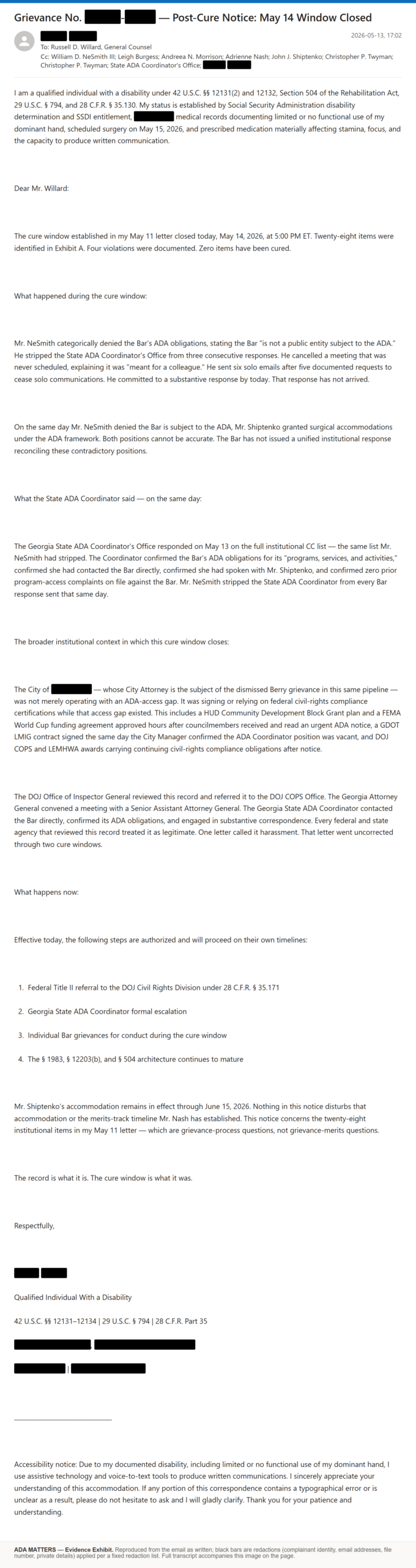
I am a qualified individual with a disability under 42 U.S.C. §§ 12131(2) and 12132, Section 504 of the Rehabilitation Act, 29 U.S.C. § 794, and 28 C.F.R. § 35.130. My status is established by Social Security Administration disability determination and SSDI entitlement, ███████████ medical records documenting limited or no functional use of my dominant hand, scheduled surgery on May 15, 2026, and prescribed medication materially affecting stamina, focus, and the capacity to produce written communication.
Dear Mr. Willard:
The cure window established in my May 11 letter closed today, May 14, 2026, at 5:00 PM ET. Twenty-eight items were identified in Exhibit A. Four violations were documented. Zero items have been cured.
What happened during the cure window:
Mr. NeSmith categorically denied the Bar's ADA obligations, stating the Bar "is not a public entity subject to the ADA." He stripped the State ADA Coordinator's Office from three consecutive responses. He cancelled a meeting that was never scheduled, explaining it was "meant for a colleague." He sent six solo emails after five documented requests to cease solo communications. He committed to a substantive response by today. That response has not arrived.
On the same day Mr. NeSmith denied the Bar is subject to the ADA, Mr. Shiptenko granted surgical accommodations under the ADA framework. Both positions cannot be accurate. The Bar has not issued a unified institutional response reconciling these contradictory positions.
What the State ADA Coordinator said — on the same day:
The Georgia State ADA Coordinator's Office responded on May 13 on the full institutional CC list — the same list Mr. NeSmith had stripped. The Coordinator confirmed the Bar's ADA obligations for its "programs, services, and activities," confirmed she had contacted the Bar directly, confirmed she had spoken with Mr. Shiptenko, and confirmed zero prior program-access complaints on file against the Bar. Mr. NeSmith stripped the State ADA Coordinator from every Bar response sent that same day.
The broader institutional context in which this cure window closes:
The City of ██████████ — whose City Attorney is the subject of a separate dismissed grievance in this same pipeline — was not merely operating with an ADA-access gap. It was signing or relying on federal civil-rights compliance certifications while that access gap existed. This includes a HUD Community Development Block Grant plan and a FEMA World Cup funding agreement approved hours after councilmembers received and read an urgent ADA notice, a GDOT LMIG contract signed the same day the City Manager confirmed the ADA Coordinator position was vacant, and DOJ COPS and LEMHWA awards carrying continuing civil-rights compliance obligations after notice.
The DOJ Office of Inspector General reviewed this record and referred it to the DOJ COPS Office. The Georgia Attorney General convened a meeting with a Senior Assistant Attorney General. The Georgia State ADA Coordinator contacted the Bar directly, confirmed its ADA obligations, and engaged in substantive correspondence. Every federal and state agency that reviewed this record treated it as legitimate. One letter called it harassment. That letter went uncorrected through two cure windows.
What happens now:
Effective today, the following steps are authorized and will proceed on their own timelines:
1. Federal Title II referral to the DOJ Civil Rights Division under 28 C.F.R. § 35.171
2. Georgia State ADA Coordinator formal escalation
3. Individual Bar grievances for conduct during the cure window
4. The § 1983, § 12203(b), and § 504 architecture continues to mature
Mr. Shiptenko's accommodation remains in effect through June 15, 2026. Nothing in this notice disturbs that accommodation or the merits-track timeline Mr. Nash has established. This notice concerns the twenty-eight institutional items in my May 11 letter — which are grievance-process questions, not grievance-merits questions.
The record is what it is. The cure window is what it was.
Respectfully,
██████ ███████
Qualified Individual With a Disability
42 U.S.C. §§ 12131–12134 | 29 U.S.C. § 794 | 28 C.F.R. Part 35
██████████████, ██████████████
██████████████ | ██████████████
________________________________
Accessibility notice: Due to my documented disability, including limited or no functional use of my dominant hand, I use assistive technology and voice-to-text tools to produce written communications. I sincerely appreciate your understanding of this accommodation. If any portion of this correspondence contains a typographical error or is unclear as a result, please do not hesitate to ask and I will gladly clarify. Thank you for your patience and understanding.
Dear Mr. Willard:
The cure window established in my May 11 letter closed today, May 14, 2026, at 5:00 PM ET. Twenty-eight items were identified in Exhibit A. Four violations were documented. Zero items have been cured.
What happened during the cure window:
Mr. NeSmith categorically denied the Bar's ADA obligations, stating the Bar "is not a public entity subject to the ADA." He stripped the State ADA Coordinator's Office from three consecutive responses. He cancelled a meeting that was never scheduled, explaining it was "meant for a colleague." He sent six solo emails after five documented requests to cease solo communications. He committed to a substantive response by today. That response has not arrived.
On the same day Mr. NeSmith denied the Bar is subject to the ADA, Mr. Shiptenko granted surgical accommodations under the ADA framework. Both positions cannot be accurate. The Bar has not issued a unified institutional response reconciling these contradictory positions.
What the State ADA Coordinator said — on the same day:
The Georgia State ADA Coordinator's Office responded on May 13 on the full institutional CC list — the same list Mr. NeSmith had stripped. The Coordinator confirmed the Bar's ADA obligations for its "programs, services, and activities," confirmed she had contacted the Bar directly, confirmed she had spoken with Mr. Shiptenko, and confirmed zero prior program-access complaints on file against the Bar. Mr. NeSmith stripped the State ADA Coordinator from every Bar response sent that same day.
The broader institutional context in which this cure window closes:
The City of ██████████ — whose City Attorney is the subject of a separate dismissed grievance in this same pipeline — was not merely operating with an ADA-access gap. It was signing or relying on federal civil-rights compliance certifications while that access gap existed. This includes a HUD Community Development Block Grant plan and a FEMA World Cup funding agreement approved hours after councilmembers received and read an urgent ADA notice, a GDOT LMIG contract signed the same day the City Manager confirmed the ADA Coordinator position was vacant, and DOJ COPS and LEMHWA awards carrying continuing civil-rights compliance obligations after notice.
The DOJ Office of Inspector General reviewed this record and referred it to the DOJ COPS Office. The Georgia Attorney General convened a meeting with a Senior Assistant Attorney General. The Georgia State ADA Coordinator contacted the Bar directly, confirmed its ADA obligations, and engaged in substantive correspondence. Every federal and state agency that reviewed this record treated it as legitimate. One letter called it harassment. That letter went uncorrected through two cure windows.
What happens now:
Effective today, the following steps are authorized and will proceed on their own timelines:
1. Federal Title II referral to the DOJ Civil Rights Division under 28 C.F.R. § 35.171
2. Georgia State ADA Coordinator formal escalation
3. Individual Bar grievances for conduct during the cure window
4. The § 1983, § 12203(b), and § 504 architecture continues to mature
Mr. Shiptenko's accommodation remains in effect through June 15, 2026. Nothing in this notice disturbs that accommodation or the merits-track timeline Mr. Nash has established. This notice concerns the twenty-eight institutional items in my May 11 letter — which are grievance-process questions, not grievance-merits questions.
The record is what it is. The cure window is what it was.
Respectfully,
██████ ███████
Qualified Individual With a Disability
42 U.S.C. §§ 12131–12134 | 29 U.S.C. § 794 | 28 C.F.R. Part 35
██████████████, ██████████████
██████████████ | ██████████████
________________________________
Accessibility notice: Due to my documented disability, including limited or no functional use of my dominant hand, I use assistive technology and voice-to-text tools to produce written communications. I sincerely appreciate your understanding of this accommodation. If any portion of this correspondence contains a typographical error or is unclear as a result, please do not hesitate to ask and I will gladly clarify. Thank you for your patience and understanding.